A successful murder mystery dinner thrives on atmosphere. While guests slip into their roles and work together to solve a mysterious murder case, the food plays a central role in the overall experience. Whether it’s a dark thriller set in Victorian London, an action-packed espionage mystery during the Cold War, or a light-hearted Agatha Christie-style comedy, the range of murder mystery dinner themes is virtually endless.
But why is a thematically appropriate menu so important in the first place? Simple: food is more than just sustenance. It enhances immersion, supports the staging, and transforms an entertaining evening into an unforgettable experience. When guests at a 1920s mystery are served Art Deco-inspired cocktails and period-appropriate hors d’oeuvres, they dive even deeper into the world of gangsters and flappers. An Asian-inspired menu for a Yakuza thriller creates cultural authenticity. And for a bloody horror-comedy, things can get delightfully macabre and creative.
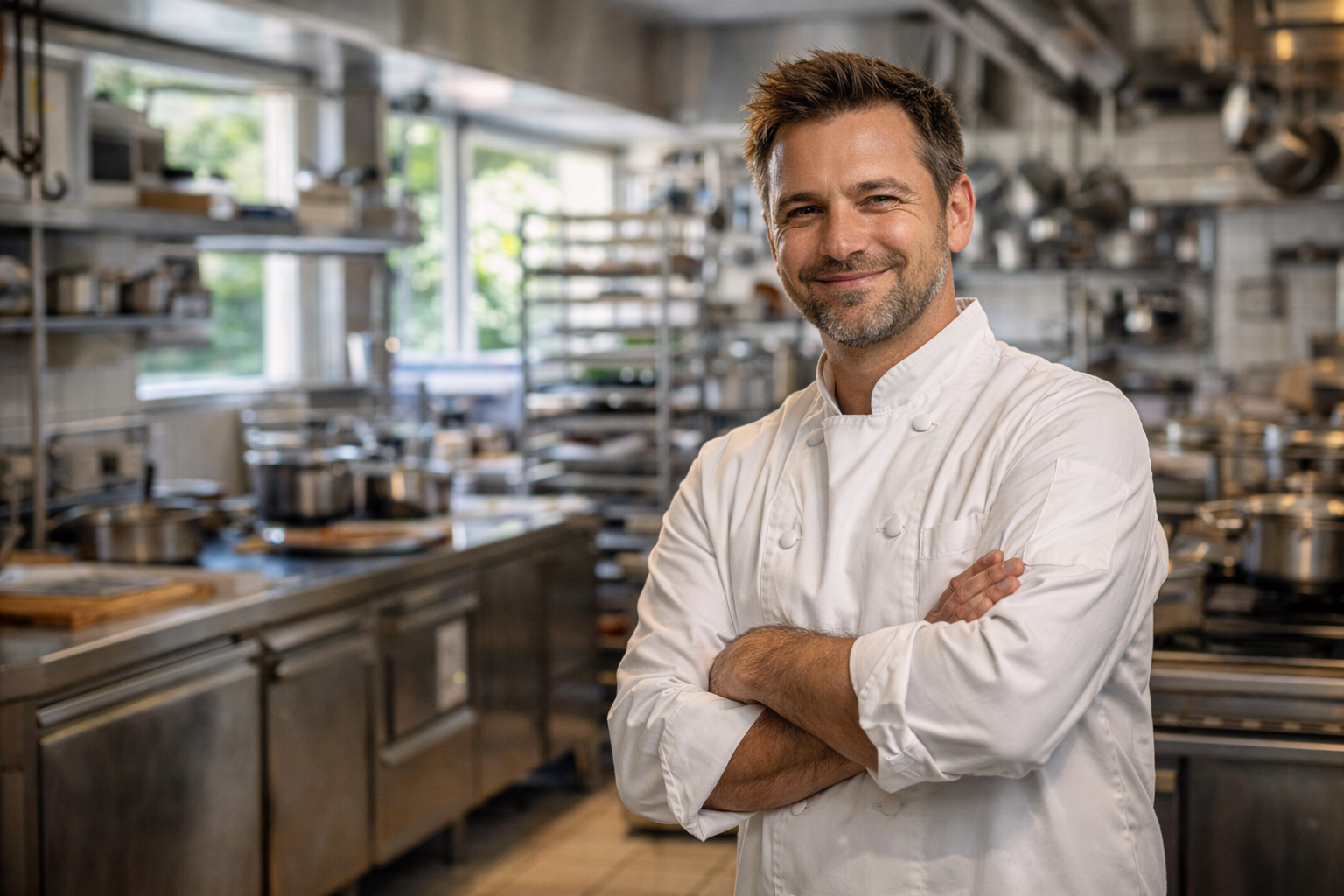
We spoke with head chef Marco Dietrich, who has been running event catering for over 15 years and specializes in themed dinners. He reveals how to create the perfect menu for a murder mystery dinner, step by step.
Interview with Head Chef Marco Dietrich
Marco, how do you approach planning a menu for a themed dinner?
The first step is always: I have to really understand the theme. Not just superficially, but in depth. For a murder mystery dinner, I ask: What time period does the story take place in? Where is it set geographically? What mood should be created, dark and serious or light and humorous? These questions determine the direction of the entire menu.
Can you give a concrete example?
Sure. Let’s take a murder mystery dinner with the theme “Murder on the Orient Express.” We have the 1930s, high society, a train journey through Europe heading to Istanbul. Immediately I think of the cuisine of that era, French-influenced but with Oriental touches. The menu should be elegant, classic, but also bring a certain exoticism. I’d start with a cold appetizer, perhaps a salmon tartare with caviar, followed by a clear consommé. For the main course, beef tournedos with morel mushrooms, with gratin potatoes on the side. For dessert, something light like peach melba. Between courses, you could serve Turkish coffee or small baklava. That brings in the Oriental connection.
How important is authenticity?
Very important, but it has to remain practical. You have to balance historical accuracy with what guests will enjoy and what you can realistically execute. Nobody wants to eat the heavy, fatty cuisine of the Victorian era at a Victorian mystery dinner. You take inspiration from the period but interpret it in a contemporary way. For me, authenticity mainly means: it has to feel coherent.
How do you accommodate different dietary requirements?
That’s unavoidable these days. I always plan so that the core elements of the menu are flexible. For a meat main course, I always have an equivalent vegetarian alternative, not just the side dishes, but a standalone dish. For a film noir dinner with steak, I’d have, for example, a portobello mushroom medallion with the same sauce. It’s important that no one feels shortchanged.
What role do colors and presentation play?
A huge one! For a Gothic horror mystery, I work a lot with dark colors: black pasta with squid ink, beet elements, dark berries. For a summery garden mystery à la Miss Marple, it’s light, fresh colors: green herbs, yellow lemons, white creams. The visual aspect must support the story. A blood-red coulis can be very dramatic for a murder mystery. You can play with that.
Are there dishes you would avoid?
Definitely. Anything too complicated to eat is out. Guests need to concentrate on the story, solve puzzles, interact in their roles. If they’re constantly struggling with lobster shells or twirling spaghetti, it’s distracting. I focus on dishes that are elegant but uncomplicated to eat. Finger food for the cocktail phase, appetizers you can easily eat with a fork, main courses that are already portioned.
What about themed beverages?
They’re fantastic for enhancing the atmosphere! For a Prohibition-era mystery, classic 1920s cocktails are a must: Gin Fizz, Sidecar, maybe a secret “moonshine.” For a British country house mystery, I serve sherry as an aperitif and good Scotch after dinner. You can also rename drinks thematically: a Cosmopolitan becomes “Lady Scarlet’s Last Sin” for an aristocratic murder case. Guests love these details.
How do you build tension throughout the evening with the menu structure?
That’s a brilliant question and something many people overlook. The menu should mirror the narrative arc of the mystery itself. I think of it in three acts, just like a good thriller. The appetizers are the introduction: light, intriguing, setting the scene. They should spark curiosity without being overwhelming. Then comes the main course, which is the climax. This is where the drama peaks, where the flavors are most intense, where you make your boldest statement. Finally, dessert is the resolution. It should provide satisfaction and closure, but also leave guests with something memorable to talk about.
For example, in a murder mystery set in a haunted mansion, I might serve a deceptively innocent-looking appetizer, perhaps a delicate panna cotta that hides a dark berry compote underneath, symbolizing hidden secrets. The main course could be dramatically presented, maybe with dry ice or a reveal under a cloche. And the dessert might be something that looks sinister but tastes unexpectedly sweet, like a chocolate “graveyard” with cookie tombstones. It’s the twist ending in culinary form.
That’s fascinating. How do you handle the pacing when guests are actively engaged in solving the mystery?
Timing is everything, and it’s probably the most challenging aspect. You’re not just feeding people, you’re orchestrating an experience where food, drama, and interaction have to flow seamlessly. I always work closely with the mystery organizer to understand the story structure. Where are the big reveals? When do guests need to investigate? When are they reading clues or discussing suspects?
I design the menu so that certain courses require minimal attention. For instance, during an investigation phase, I might serve small canapés or tapas-style dishes that guests can nibble on while moving around and talking. These need to be room temperature, easy to pick up, and not messy. You don’t want someone dropping a clue because their hands are greasy.
Conversely, when everyone is seated for a big revelation scene, that’s when I serve a plated course that demands attention, something beautiful that gives the moment gravitas. The food becomes part of the theater. I also build in natural pauses. A palate cleanser like sorbet isn’t just about flavor, it’s a dramatic pause, a breath before the next act. It gives guests a moment to process what they’ve learned, to whisper theories to each other.
And here’s a trick I use: I sometimes incorporate the timing into the mystery itself. Maybe a course is “delayed” because the fictional chef is being questioned, or a special dish is presented by a character as a peace offering or a distraction. The food becomes woven into the narrative, not separate from it.
What’s your most important tip for amateur hosts?
Less is more. Many people think they need three components with every course and everything has to be spectacular. That just leads to stress. Choose three to four courses that you can really execute well. Quality and attention to detail are more important than quantity. And plan for breaks! At a murder mystery dinner, guests need time between courses to puzzle and interact. The food should accompany the evening, not dominate it.
Do you have a favorite murder mystery theme?
I particularly like the 1920s and 30s, that elegance, that decadence, combined with a sense of danger. The cuisine of that era offers so many possibilities. But honestly, every theme is appealing if you really engage with it. Even a futuristic sci-fi mystery can be culinarily exciting: molecular gastronomy, unusual textures, surprising colors. The creative challenge is what makes it exciting.
Thank you so much for the conversation, Marco!
My pleasure. And remember: a good murder mystery menu should be just as thrilling as the case itself, with little surprises, a common thread, and an unforgettable finale.
What can we learn from Marco?
A thematically appropriate menu transforms a good murder mystery dinner into an extraordinary experience. With proper planning, attention to detail, and the courage to be creative, any host can take their guests on a culinary journey into the world of crime. Whether you choose a dark thriller, a glamorous espionage story, or a humorous mystery comedy, let the food become part of the story.
More articles on this topic
Unleash Your Inner Detective: How to Be the Killer in a Murder Mystery Without Getting CaughtPrepare a mystery dinner location: Create atmosphere and suspense
DIY vs. Buying: Which Murder Mystery Dinner Is Right for You?
7 Things I Learned Writing My Own Murder Mystery Dinner
A murder mystery dinner is created: Fascinating glimpses into the creation of a murder mystery world